
ARYANA SHEIBANI
Threaded Voids
18 - 30 APRIL 2026
VERNISSAGE
SATURDAY 18 APRIL
5- 8 PM
Wed- Fri 12 - 6pm
and by appointment
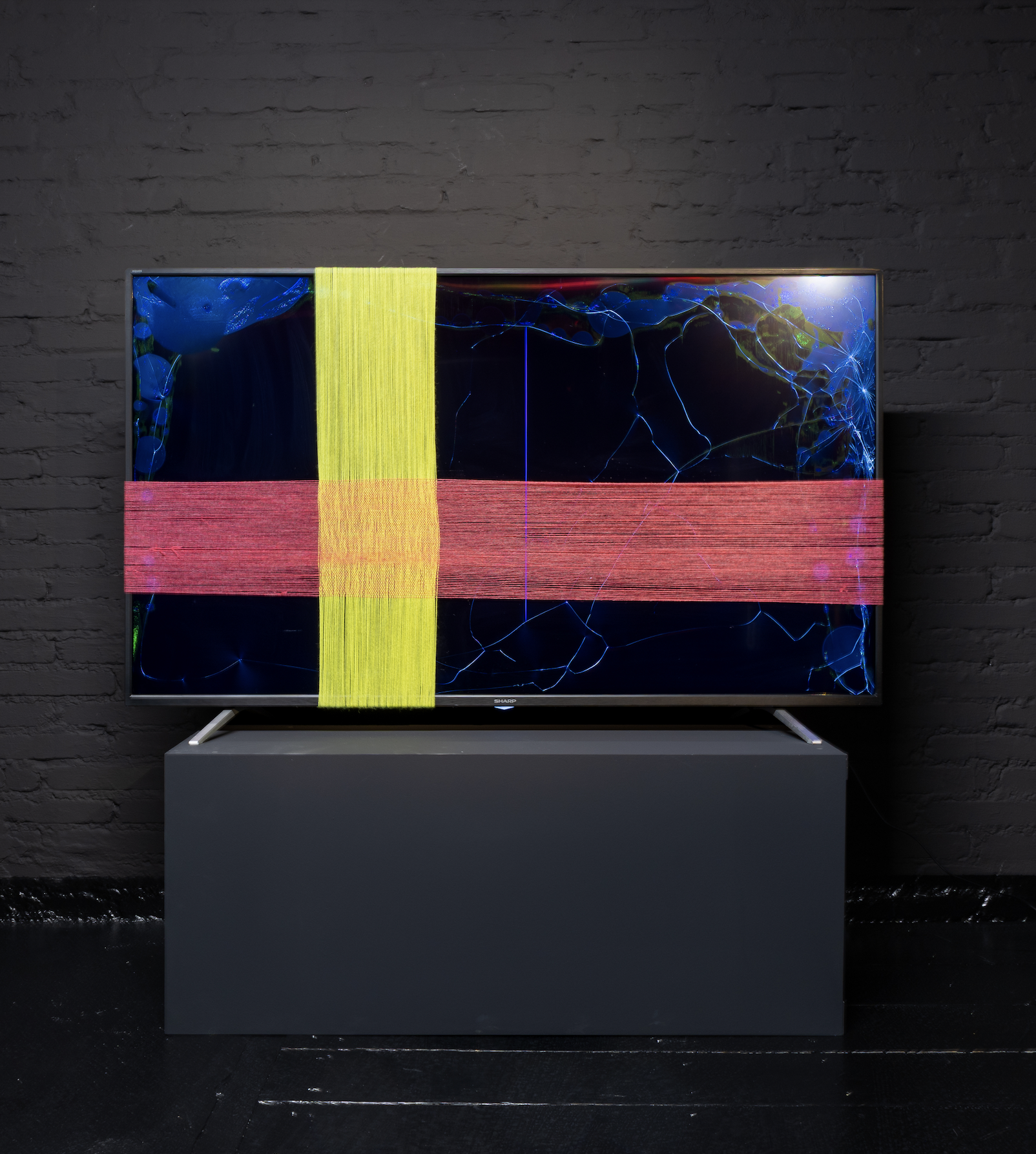
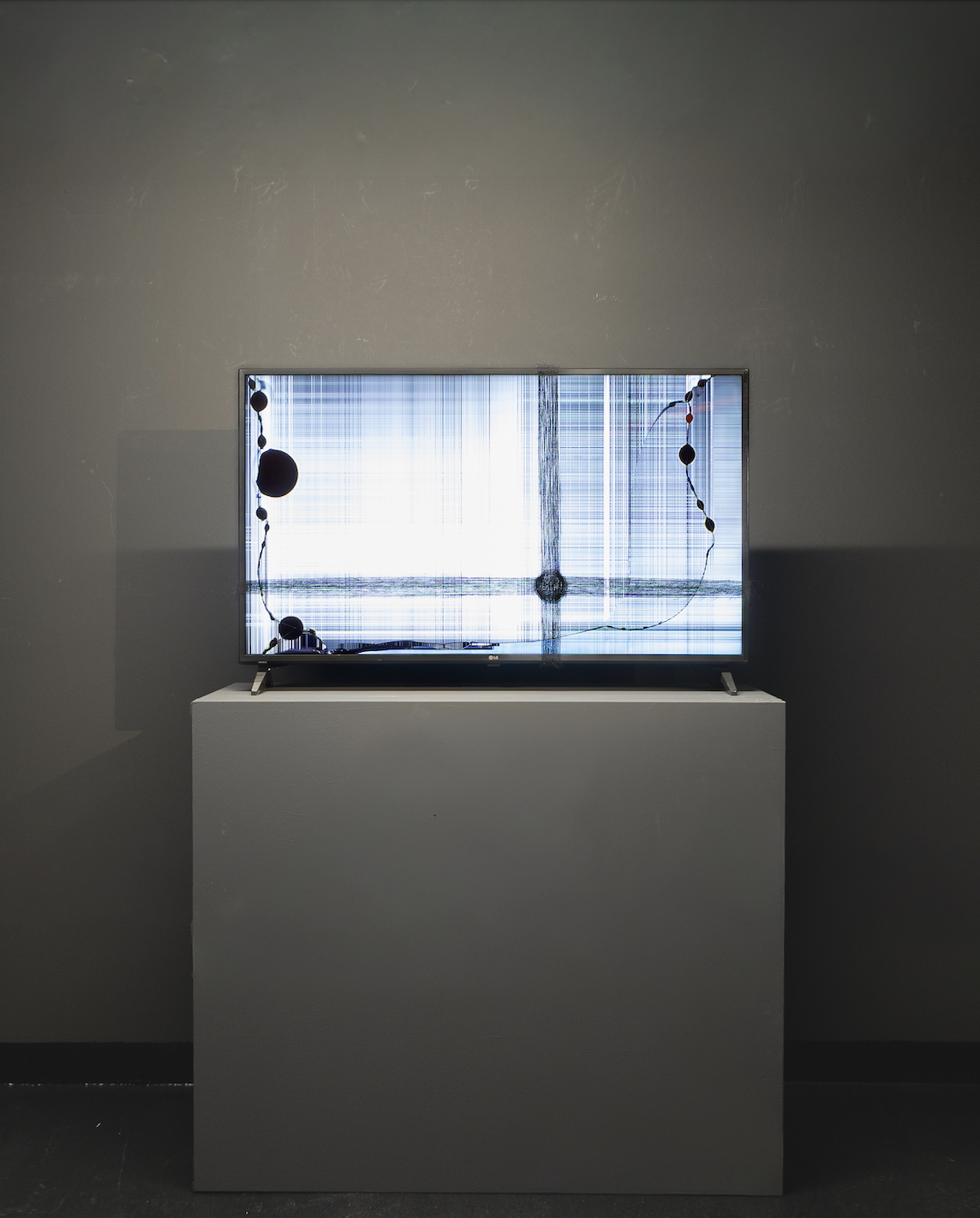
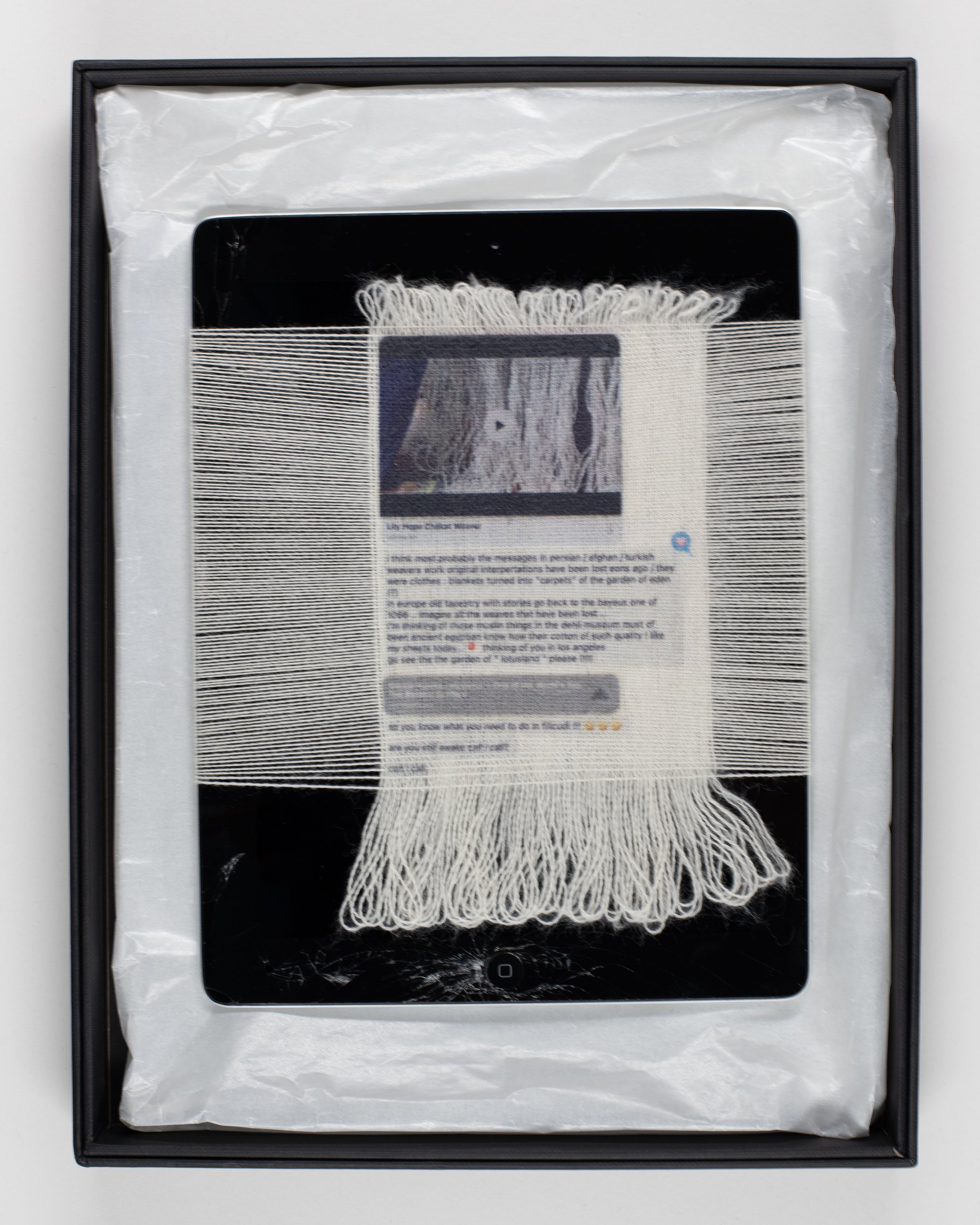
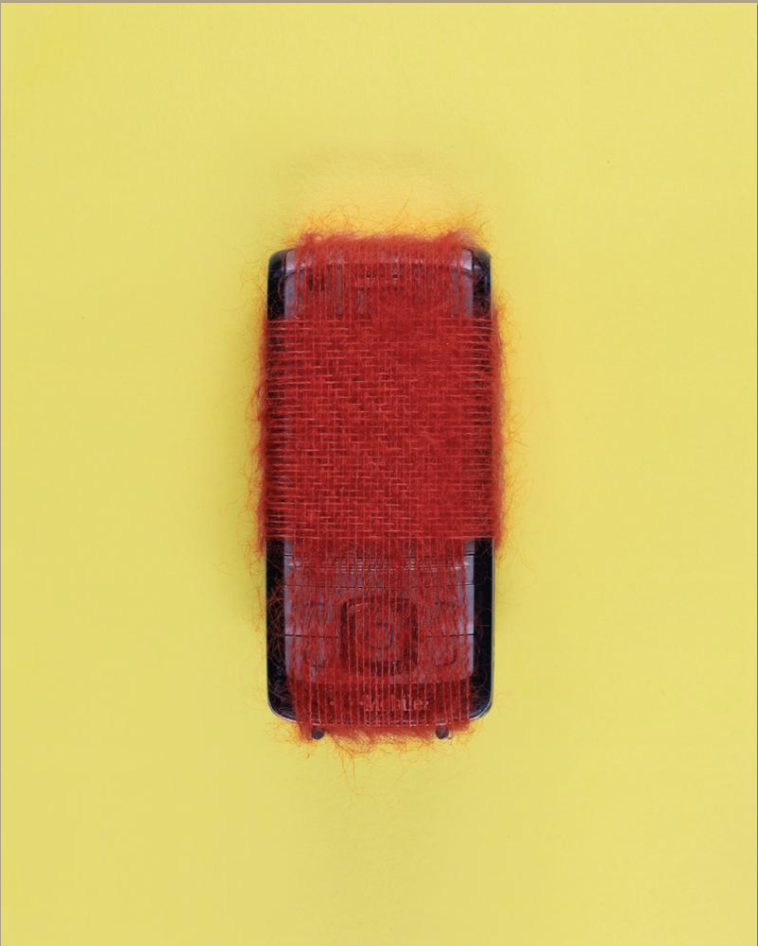
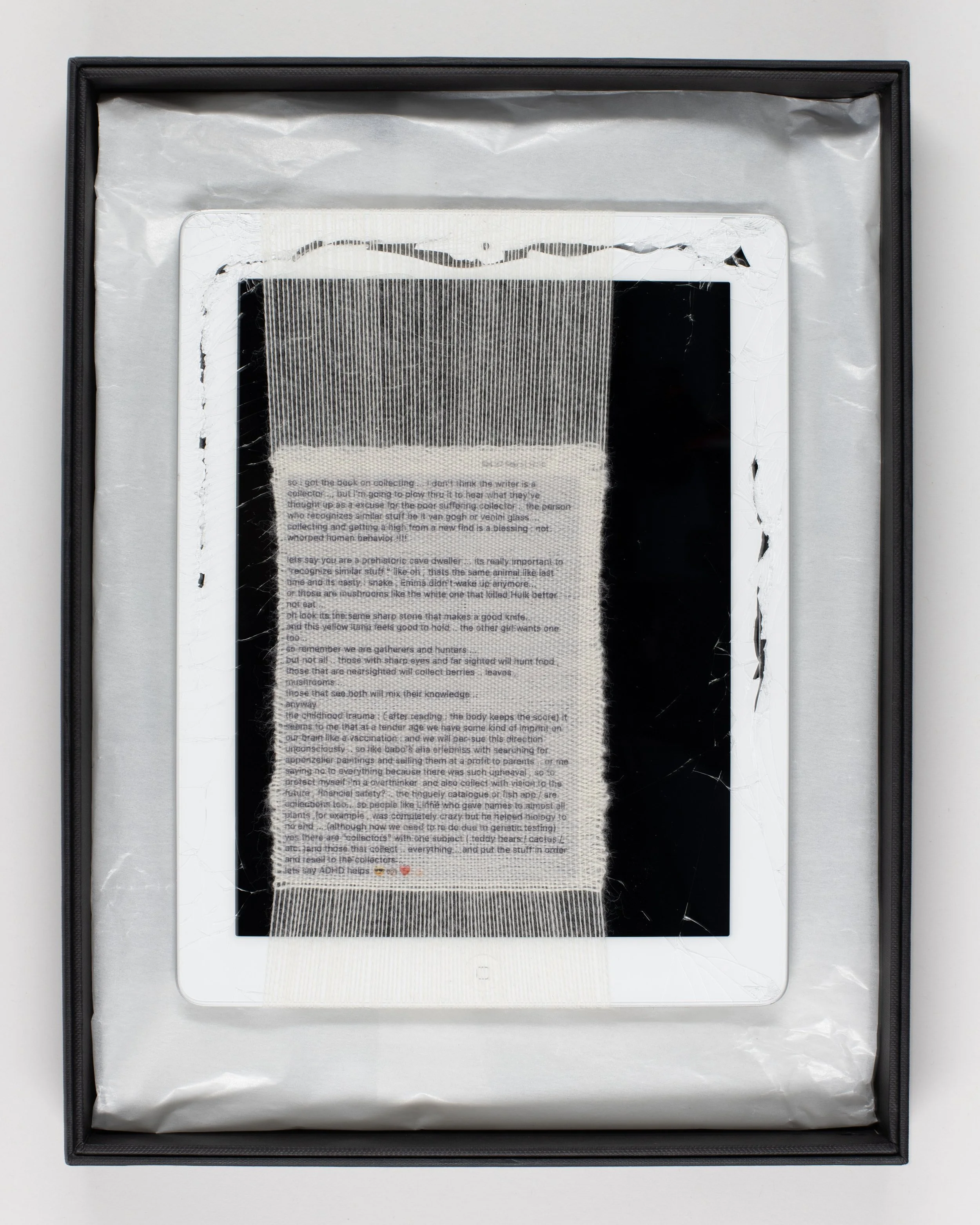
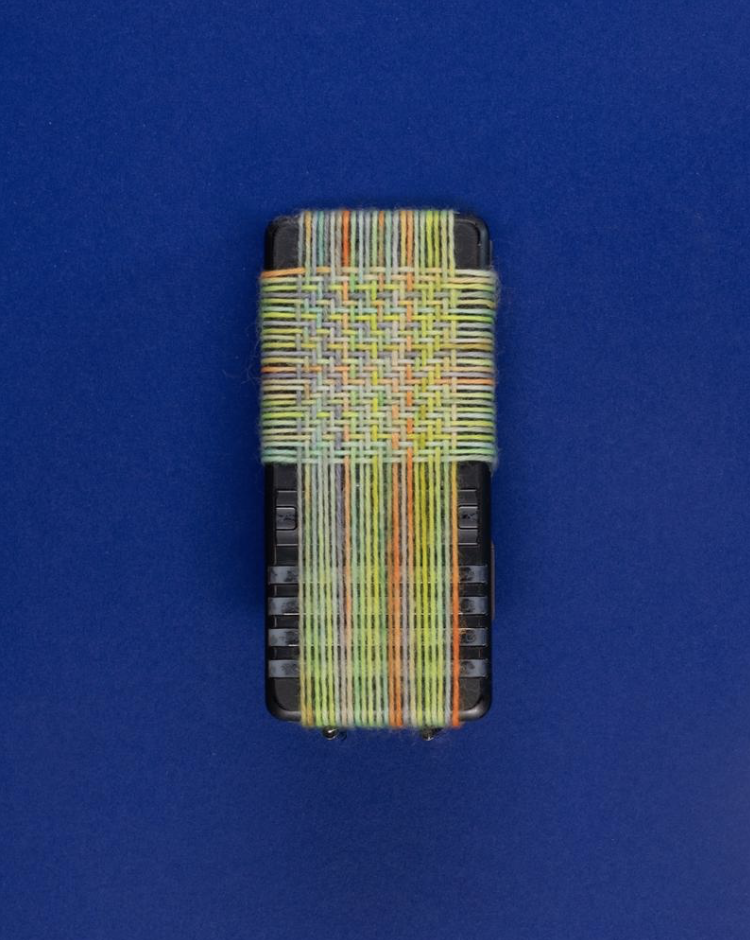
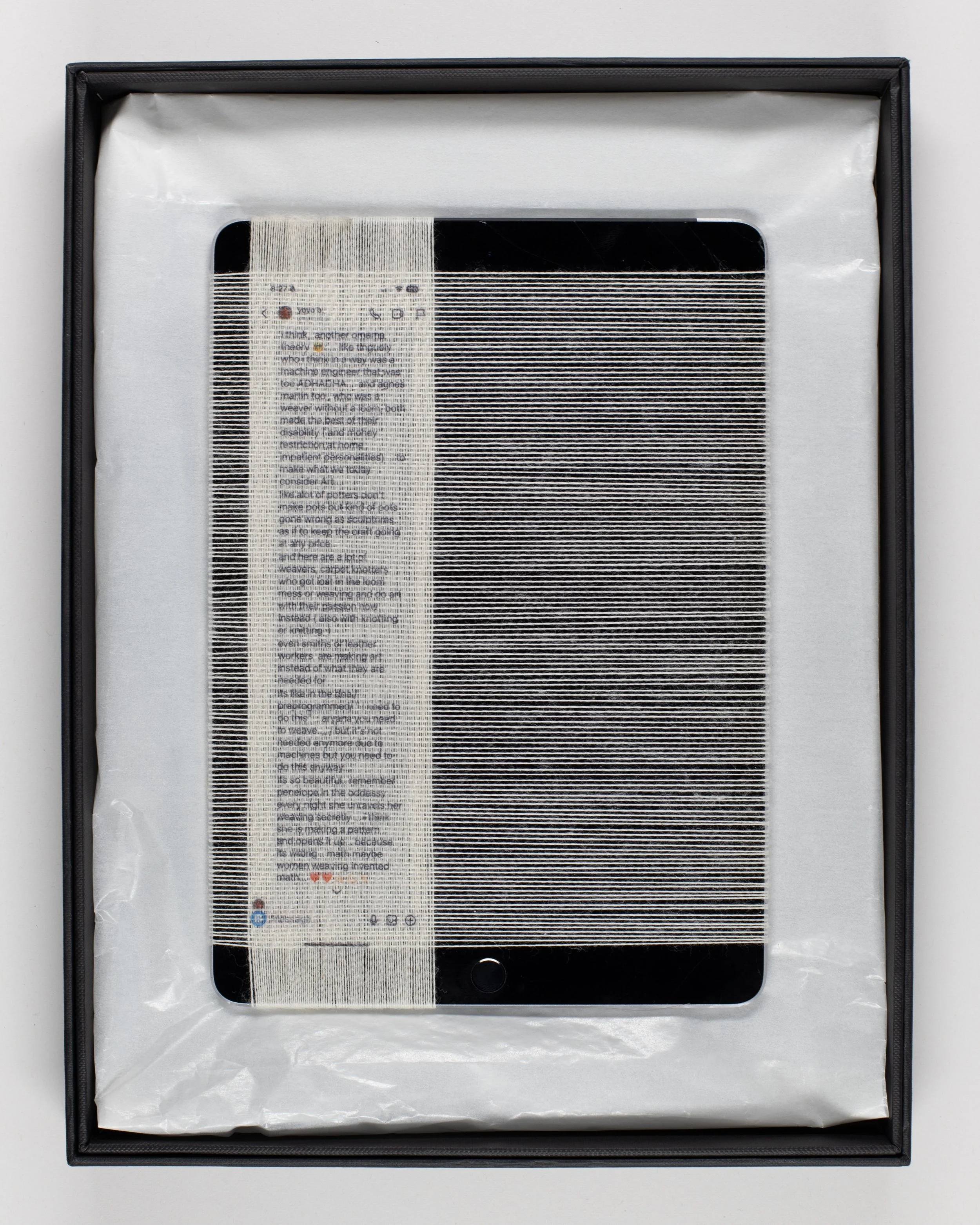
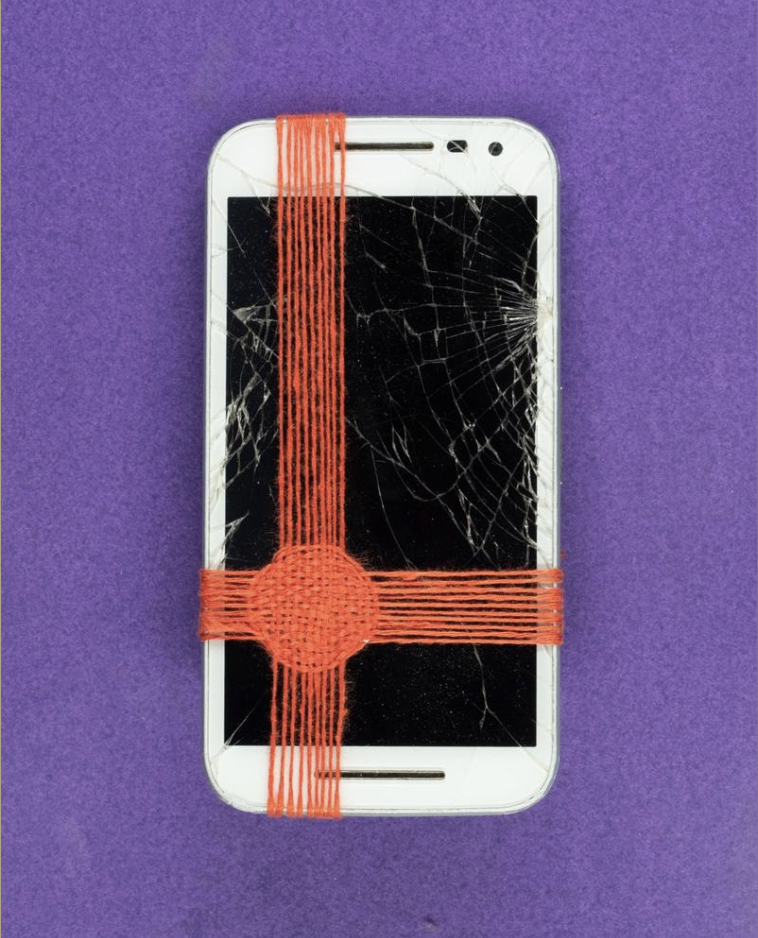
Aryana Sheibani’s exhibition at Lele Projects presents the endless possibilities of weaving as a medium. Like poison ivy, thread spreads across objects and gives them a new life, a new beauty, transforming forms so familiar that they often stop catching our attention. The exhibition brings together three types of decommissioned or broken gadgets like televisions, iPads, and brick phones, each united by the new life gifted to them through the artist’s hand.
By weaving around these objects, Sheibani enters into a kind of conversation with them, repairing them through an intimate, tactile process. “I like broken things,” the artist told me in one of our conversations, explaining that she often acquires the gadgets from phone repair shops and eBay. Voided of their original pragmatism, these devices become vessels for beauty, vessels for art which are no longer conventionally useful, nor functional, but somehow eternal. They begin to exist outside the timeline of technological progress, collapsing past, present, and future into a single act of resuscitation.
The cracks on the screens add another layer of history, hinting at their previous lives. In this way, the gadgets become fossils of our time, sanctified and frozen in place by the thread that surrounds them.
The iPads in particular function as an homage to the artist’s grandmother, whose text messages are ‘weaved’ into this body of work. Also called “tablets,” they evoke the transmission of ideas across generations, becoming artefacts to be looked at and cherished rather than used. This is reinforced by their method of display: exhibited in archival boxes, they elevate private thoughts into relics, preserving them as something precious and enduring. There is a quiet irony in a touch-screen device becoming an object forbidden to touch.
The messages themselves, charged with personal history, are UV-printed onto the weaving. The resulting works become tangible materialisations of the ideas expressed by the artist’s grandmother; we witness thoughts taking on physical form.
Arachne, Penelope, Minerva, Ariadne, Helen of Troy, Circe, Calypso. Throughout ancient mythology, women are united by acts of craft. In countless Greek myths, women weave as a gesture of love, a symbol of power, a means of survival, and a tactic of guidance. Handcraft feels almost encoded into our DNA: a human urge to make, to create, to transform. In a society where technology and industry have largely replaced the necessity of craft, that impulse has not disappeared. It has instead seeped into art, “as if to keep the craft going at any price”.
For as long as I have known Aryana, she has always been knitting or weaving. There is something meditative about watching her immersed in manual work; it seems organic, almost therapeutic, as if everything is momentarily in its right place.
Maybe weaving is in Aryana’s DNA after all…